

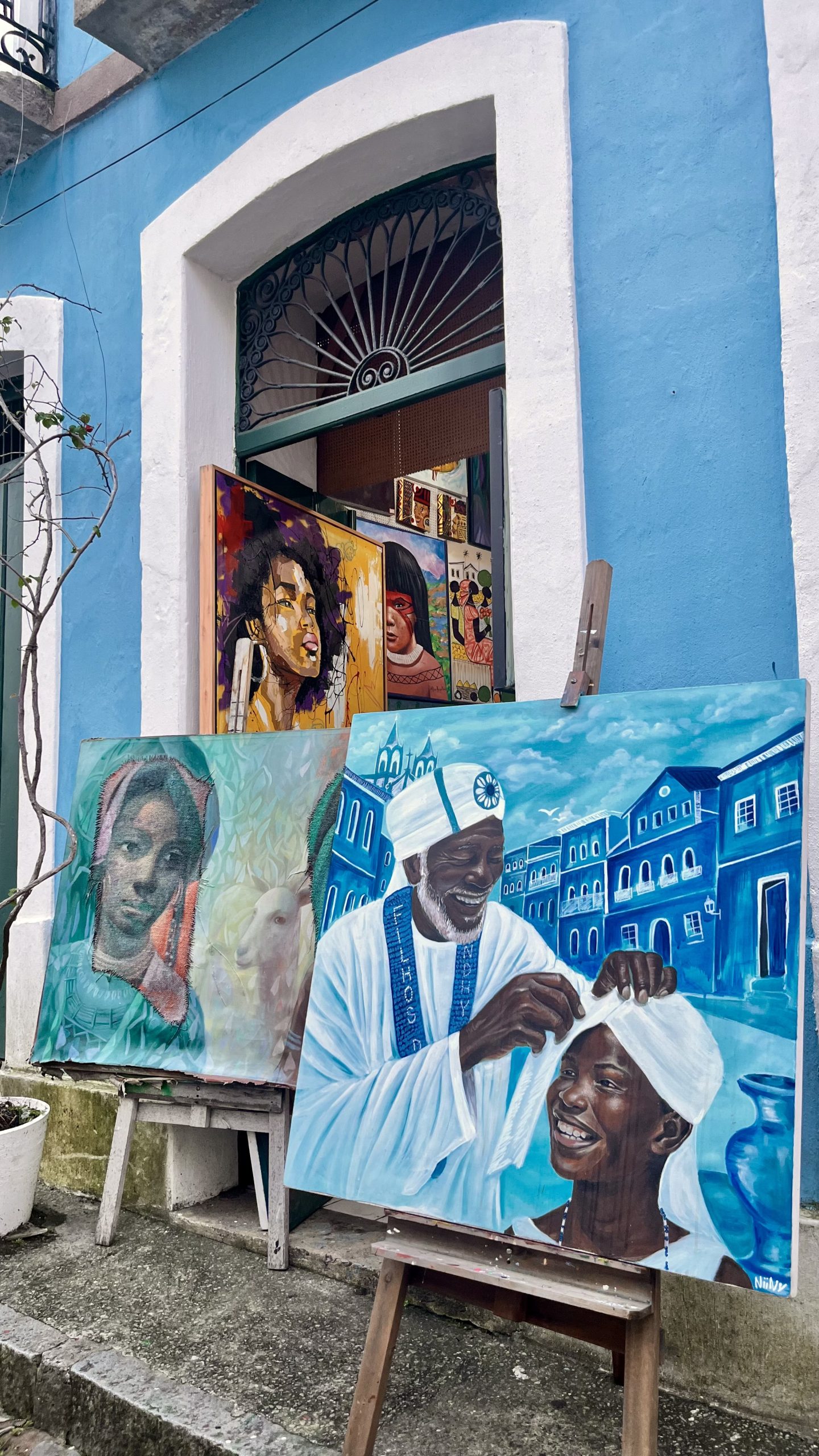
Why Salvador Is One of the Most Culturally Powerful Destinations in the World

Salvador isn’t just another coastal city in Brazil — it holds weight.
Often described as having the largest population of African descendants outside of Africa, Salvador is considered the heart of Afro-Brazilian culture. Roughly 80% of its population identifies as Black or mixed-race, and that presence is not subtle — it shapes the city’s rhythm, aesthetics, spirituality, and identity.
From music to food to religion, the African diaspora isn’t something you learn about here — it’s something you feel.
First Impressions: When the City Matches the Story
I had heard about Salvador through my sister-in-law — how beautiful it was, how different it felt from other Brazilian cities, how it stayed with you.
And the moment I landed and made my way toward the Porto da Barra area, I understood exactly what she meant.
It wasn’t just pretty. It felt alive.
I stayed in a small Airbnb just a 5-minute walk from the beach — the kind of place where you don’t overthink design, but everything works.
And that location? Perfect.
Along the coastline, you can walk all the way toward Farol da Barra — one of the most iconic sunset spots in the city. People gather naturally. No forced vibe. No performance. Just presence.
The sunsets there don’t just look good — they linger.
The Energy, The People, The Presence
There’s something you notice almost immediately: people take care of themselves here.
Fitness and physical conditioning are a big part of Brazilian culture in general — but in Salvador, it shows up differently. You see all types of bodies. Different shapes, different compositions — but still toned, still intentional.
And the beauty?
It’s everywhere.
Everywhere you turn, you see stunning people — not in a curated, filtered way, but in a raw, confident, completely natural way.
A Different Kind of Safety and Ease
Compared to cities like São Paulo or Rio de Janeiro, Salvador — especially around Porto da Barra — feels more relaxed.
- You’ll notice a stronger military police presence in key areas
- People move slower
- There’s less visible tension
You can be on your phone without constantly feeling on edge (while still staying aware, of course).
It’s not about being careless — it’s about not feeling like you have to be on guard every second.

What Salvador Feels Like as a Black Woman
This part goes deeper than travel.
As a Black woman, there was a level of comfort here that’s hard to explain unless you’ve felt the opposite elsewhere.
You see women wearing:
- Natural curls
- Afros
- Braids
- Every texture, every volume
And it’s not a statement. It’s not “bold.” It’s just… normal.
There’s no subtle judgment. No silent commentary. No feeling like your natural state needs to be “managed” to be acceptable.
You step outside as you are — and you blend.
Not because you’re invisible, but because you belong.
Skin tones here exist on a full spectrum. So much so that visually, no one can immediately place where you’re from. That question only comes up when you speak — which ties back to navigating language (like I shared in my previous article).
That experience — of existing without explanation — is rare. And it stays with you.
Top Things to Do in Salvador, Bahia (Beyond the Beach)
Salvador isn’t one-dimensional. There’s depth here if you look for it.
- Explore Pelourinho
Colorful colonial streets, music, and deep historical roots tied to the African diaspora. - Visit Elevador Lacerda
Connecting the upper and lower city — iconic and functional. - Walk through Mercado Modelo
Local crafts, souvenirs, and cultural textures. - Experience a Candomblé ceremony (respectfully)
A spiritual practice rooted in African traditions, still very present in Salvador. - Beach-hop beyond Porto da Barra
Each stretch of coastline has its own energy.
Food You Shouldn’t Miss in Salvador
Bahian cuisine is heavily influenced by West African flavors.
Try:
- Acarajé (black-eyed pea fritters fried in palm oil)
- Moqueca (seafood stew with coconut milk and dendê oil)
- Fresh tropical juices and local seafood
Food here isn’t just food — it’s heritage.
Final Thoughts: Why Salvador Is More Than a Destination
Salvador isn’t polished in the way some global cities are.
It’s layered. Emotional. Cultural.
And for those connected — directly or indirectly — to the African diaspora, it hits differently.
It’s not about luxury in the traditional sense.
It’s about recognition.
Reflection.
And a quiet, powerful sense of belonging.
And that? You can’t really put a price on.

