

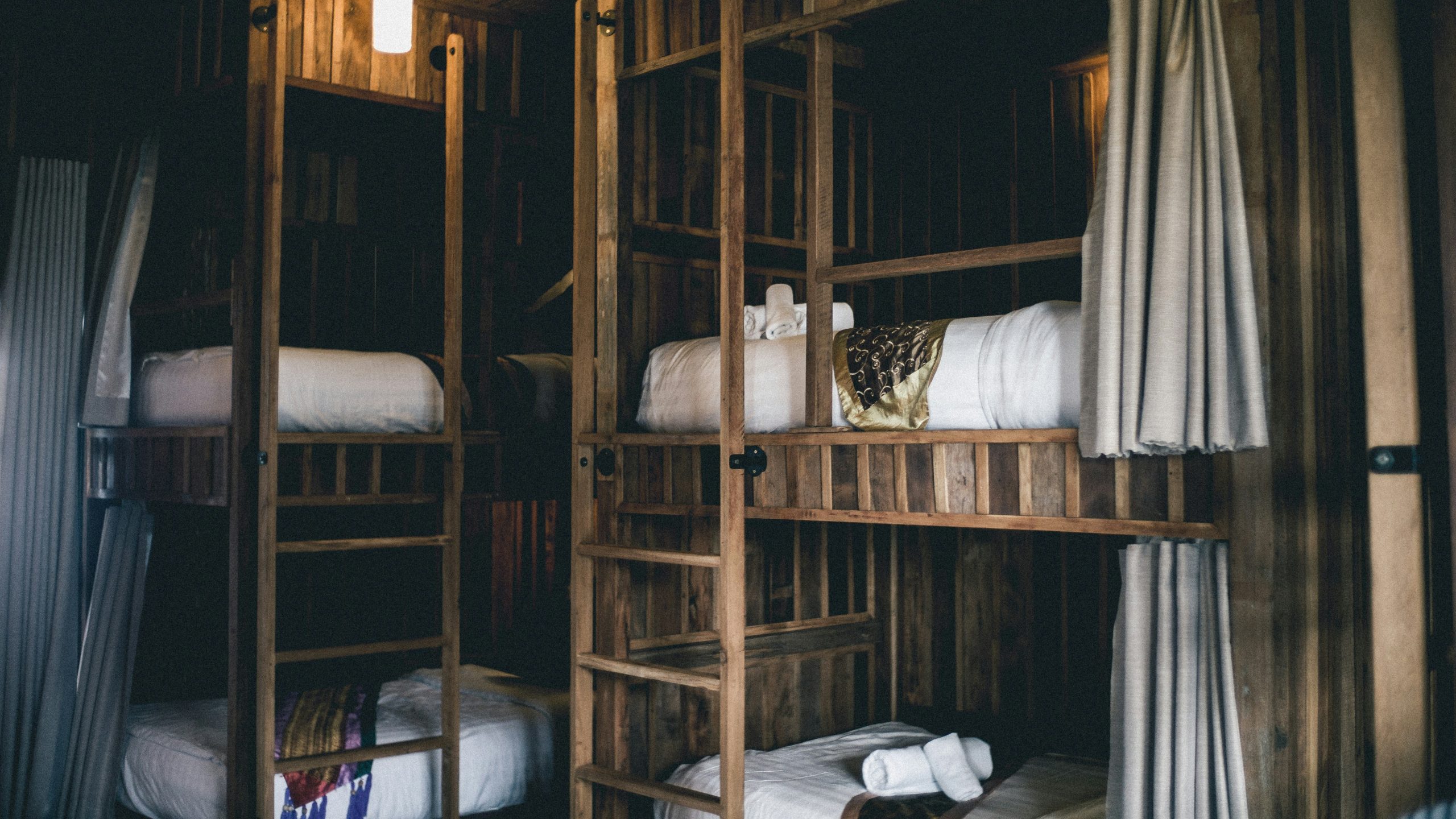
Shared accommodation can be one of the smartest ways to reduce the cost of travelling or working away from home.
But there's a reason many people hear "shared accommodation" and immediately picture crowded bedrooms, messy kitchens and waiting for someone to finish in the bathroom.
The problem isn't necessarily sharing.
It's how the sharing is designed.
That distinction became increasingly obvious to me after years of travelling — and it eventually influenced how I built Seerene Homes.
Too many people
The easiest way to make shared accommodation profitable is to maximize occupancy.
Add another bed. Convert another corner. Fit another guest.
Financially, the logic is obvious.
Experientially, it can be terrible.
More guests means more noise, more bathroom conflicts, more kitchen traffic and less personal space.
At some point, a property stops feeling shared and starts feeling crowded.
Those aren't the same thing.
Sometimes the simplest luxury is simply fewer people.
Sleep becomes an afterthought
A surprising number of accommodations invest more effort into decorative pillows than the actual sleeping experience.
For travellers, airline crew and professionals between shifts, this is backwards.
The bed is the product.
Mattress quality, temperature, noise, blackout capability and privacy matter more than an Instagram-friendly wall.
A shared stay can be beautiful.
But first, it has to let people sleep.
Nobody designs the transitions
Most shared spaces are designed around rooms.
Bedroom. Bathroom. Kitchen.
But the experience often breaks down between those rooms.
Where does someone's suitcase go? Where can coats be stored? Can two guests prepare for work without getting in each other's way? Are there mirrors outside the bathroom? Can someone make breakfast early without waking everyone else?
Those small operational questions shape the stay far more than people realize.
The rules are either nonexistent or overwhelming
Shared accommodation needs boundaries.
But nobody wants to arrive somewhere and read a twelve-page constitution.
Good house rules should reduce friction without making guests feel supervised.
Quiet hours. Kitchen expectations. Bathroom awareness. Cleaning etiquette. Visitor policies.
Clear instructions help strangers share a space without constantly negotiating how the space should work.
The best rules are the ones guests barely notice because the environment already makes the expected behaviour obvious.
Cheap becomes the entire proposition
This might be the biggest mistake.
Shared accommodation is often sold with one message:
It's cheaper.
That's not enough.
People still want comfort. They still want cleanliness. They still want privacy. They still want to feel good when they walk through the door.
Affordable shouldn't mean accepting the worst version of everything.
There's room between a crowded crash pad and an expensive hotel.
That middle ground is interesting.
Consistency matters more than extravagance
A guest doesn't need everything to be luxurious.
They need it to work.
The room they were promised should be ready. The bathroom should be clean. The Wi-Fi should work. The check-in instructions should make sense. The bedding should feel fresh. And the property should look reasonably similar to the photographs.
Consistency builds trust.
Once guests trust the space, sharing becomes much easier.
Why this shaped Seerene Homes
When I thought about the kind of shared accommodation I wanted to create, I kept coming back to the same idea:
What if we didn't try to fit as many people as possible? What if the space was intentionally limited? What if better beds mattered? What if there were fewer people, clearer systems and more attention paid to how someone actually feels after an early flight or a long shift?
That's how the YOW house evolved.
Not as an attempt to reinvent shared accommodation.
Just to remove some of the compromises people had become accustomed to accepting.
It's also the same thinking behind how we approach managing properties for owners — fewer compromises, clearer systems, and more attention paid to the details that actually affect a guest's stay.
Shared doesn't have to feel crowded
There's nothing inherently uncomfortable about sharing a home.
We do it with friends and family all the time.
What makes a shared property uncomfortable is usually a mismatch between how many people use the space and how thoughtfully that space has been prepared for them.
Get that balance right and shared accommodation becomes something very different:
Affordable. Comfortable. Practical.
And somewhere you can actually rest.